Precisely Empowering Biomedical Materials: Research and Application of Low-Temperature Plasma Modification Technology for Improving Biocompatibility
Biomedical polymer materials are widely used in medical products such as artificial organs and medical catheters, and are divided into two categories: natural and synthetic. However, their inherent properties fail to meet the requirements of human biocompatibility, which are prone to cause problems like blood coagulation and tissue rejection, thus limiting their clinical applications. Therefore, surface modification has become a key breakthrough path, and low-temperature plasma modification technology has emerged as a core research direction in this field due to its precise, efficient and eco-friendly characteristics.
To understand the value of this technology, it is necessary to first clarify the connotation of biocompatibility: it refers to the degree of biological, chemical and physical compatibility when materials come into contact with the human body, which directly determines the safety and effectiveness of their application, and mainly includes two core dimensions: hemocompatibility and histocompatibility.
In terms of hemocompatibility, when pristine materials contact blood, they tend to adsorb proteins and induce coagulation, which is a fatal defect for devices such as artificial heart valves. For histocompatibility, materials are required not to trigger pathological reactions like inflammation and rejection after implantation, and must be non-toxic, non-antigenic and non-carcinogenic. Pristine materials are difficult to meet these requirements, which highlights the necessity of surface modification.
Plasma is the fourth state of matter, which is classified into high-temperature plasma and low-temperature plasma. Without damaging the bulk properties of materials, low-temperature plasma can precisely regulate the surface chemical composition and physical structure, and directionally improve biocompatibility, which is the core advantage for its wide application.
There are three core technical approaches for low-temperature plasma modification, which complement each other to meet different modification objectives:
First is plasma surface treatment: materials are placed in a specific gas atmosphere, where high-energy particles break the surface molecular bonds to form active sites, realizing group reconstruction and regulating properties such as wettability. For example, treating polyurethane catheters with oxygen plasma can introduce polar groups and improve their hemocompatibility.
Second is plasma surface polymerization: using polymerizable gases as precursors, in-situ polymerization is carried out on the material surface to form a functional film, which can shield harmful groups and endow the material with specific biological functions. For instance, polymerization with nitrogen-containing precursors can introduce amino groups to enhance histocompatibility, and this method is suitable for materials with complex shapes.
Third is plasma surface graft polymerization: materials are first treated with plasma to generate active sites, and then hydrophilic monomers are initiated for graft polymerization to form graft chains, thereby improving hydrophilicity and biological activity. Take polylactic acid orthopedic materials as an example: grafting polyethylene glycol chains on their surface can effectively inhibit protein adsorption and promote osteocyte fusion.
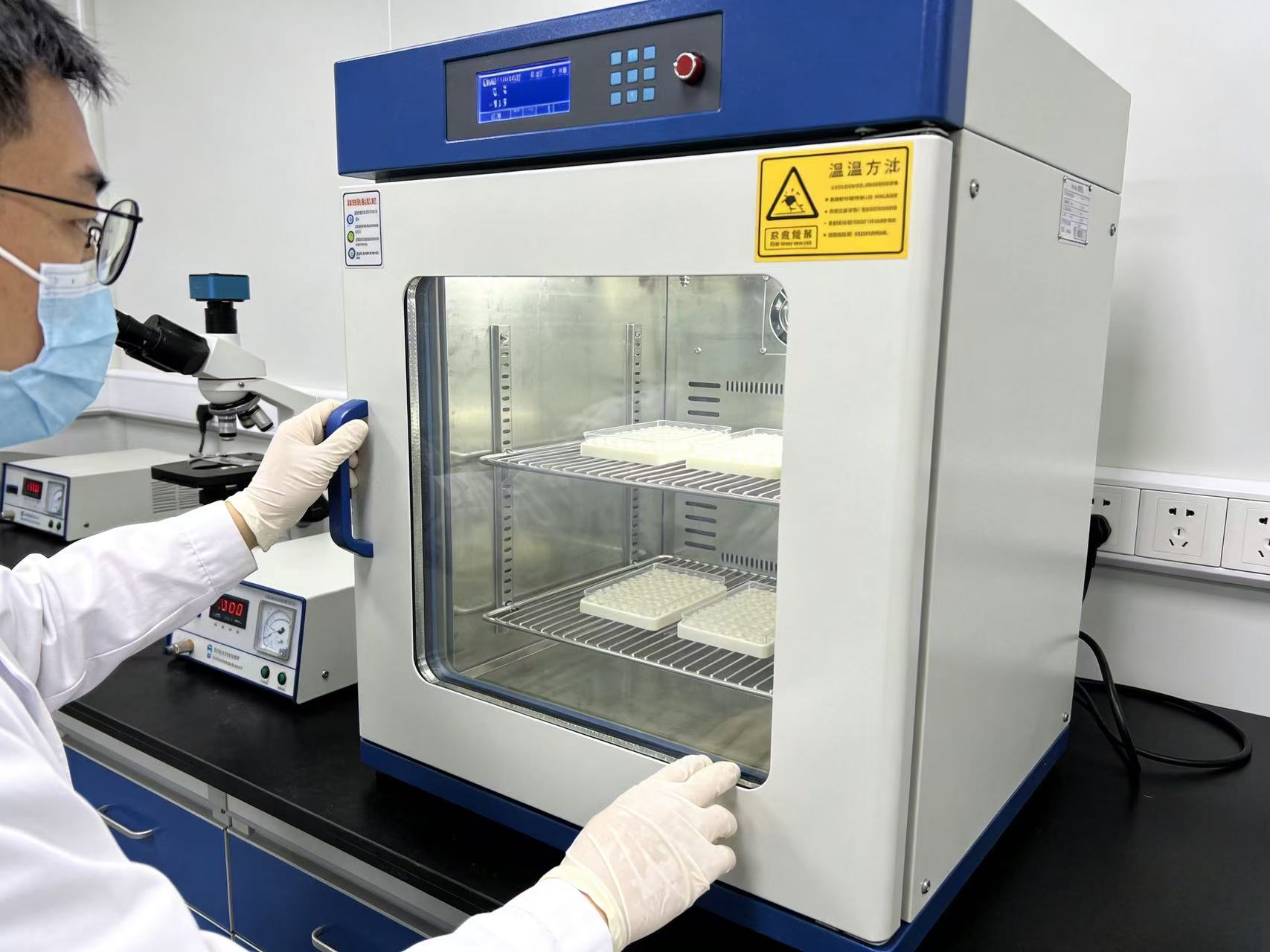
Compared with traditional technologies, low-temperature plasma modification boasts distinct advantages: first, it is precise and controllable, acting only on the nanoscale surface layer without affecting the bulk properties of materials; second, it has broad applicability and can treat materials of various shapes; third, it integrates sterilization function to enhance application safety; fourth, it is eco-friendly, as the dry-process technology generates no toxic waste and conforms to the trend of green manufacturing.
With the advancement of medical technology, the performance requirements for biomedical polymer materials have been raised. Low-temperature plasma modification technology has thus become a core means to improve biocompatibility. In the future, along with the in-depth research on its mechanism and the upgrading of processes, it will expand more application scenarios, support the research and development of high-end medical products, and drive the innovation of medical technology.